
Circles sometimes connect – and it’s that intersection which is special
Life spirals – and you think of Circles
When life feels overwhelming, it’s easy to get stuck in what other people say, think, or do. You find yourself spiralling — replaying their words, second-guessing your reactions, feeling powerless. But here’s the truth: not everything is yours to carry.
That’s where the Circle of Control comes in.
It’s a simple yet powerful reminder that your energy is finite — and that peace often begins where control ends.
At a glance
- The Circle of Control helps you focus on what’s yours to carry and what’s not.
- The Circle of Comfort shows where growth begins — just beyond the familiar.
- Together, they form a balance between safety and stretch, rest and risk.
- Therapy helps you move between the two with awareness, rather than fear.
The Circle of Control: What Belongs to You
Imagine two circles.
In the centre are things you can influence — your choices, actions, words, and boundaries.
Outside are the things you can’t — the past, other people’s opinions, the weather, or whether someone replies to your message.
The shift comes when you stop pouring energy into the outer circle and bring it back to what’s within.
For example:
“Wow, you’ve lost weight — you look great.”
What you could hear: So I was fat before?
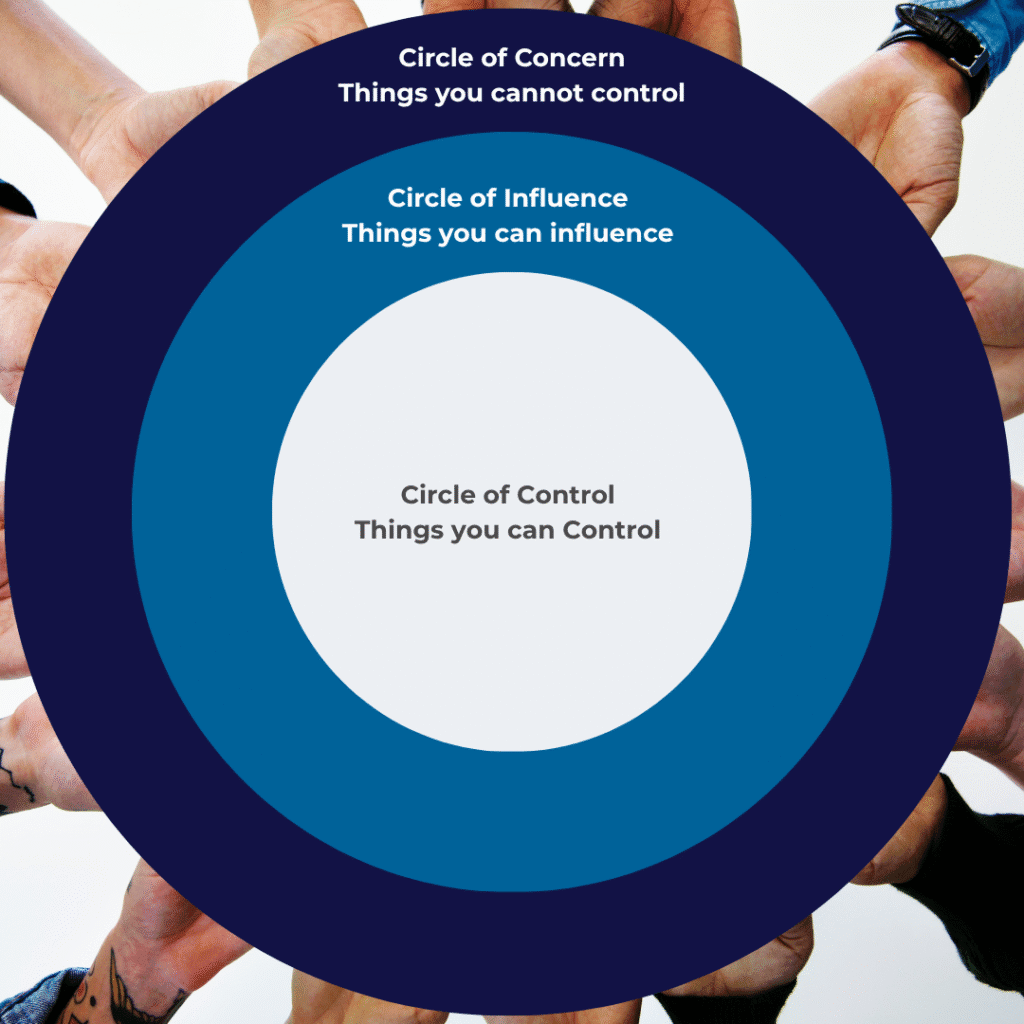
What’s in your control: your response, your self-view, and how much weight you give to their words.
Focusing on what’s inside the circle doesn’t mean ignoring what hurts. It means reclaiming energy that belongs to you.
“If someone you’d rate a 3 out of 10 has an opinion about you, why hand them 100% control over how you feel?”
That question alone can reset your entire week.
Therapy and the Need for Control
In therapy, control often shows up as both shield and symptom. Many people come in saying, “They made me feel worthless — how do I stop that?”
Together, we pause: Did they put that feeling inside you, or did their words meet something already there?
That small moment of reflection changes everything. It’s not about denying your feelings, but noticing your own agency — the quiet, powerful truth that you decide what sticks and what doesn’t.
The Circle of Comfort: Why Safety Isn’t Always Stillness
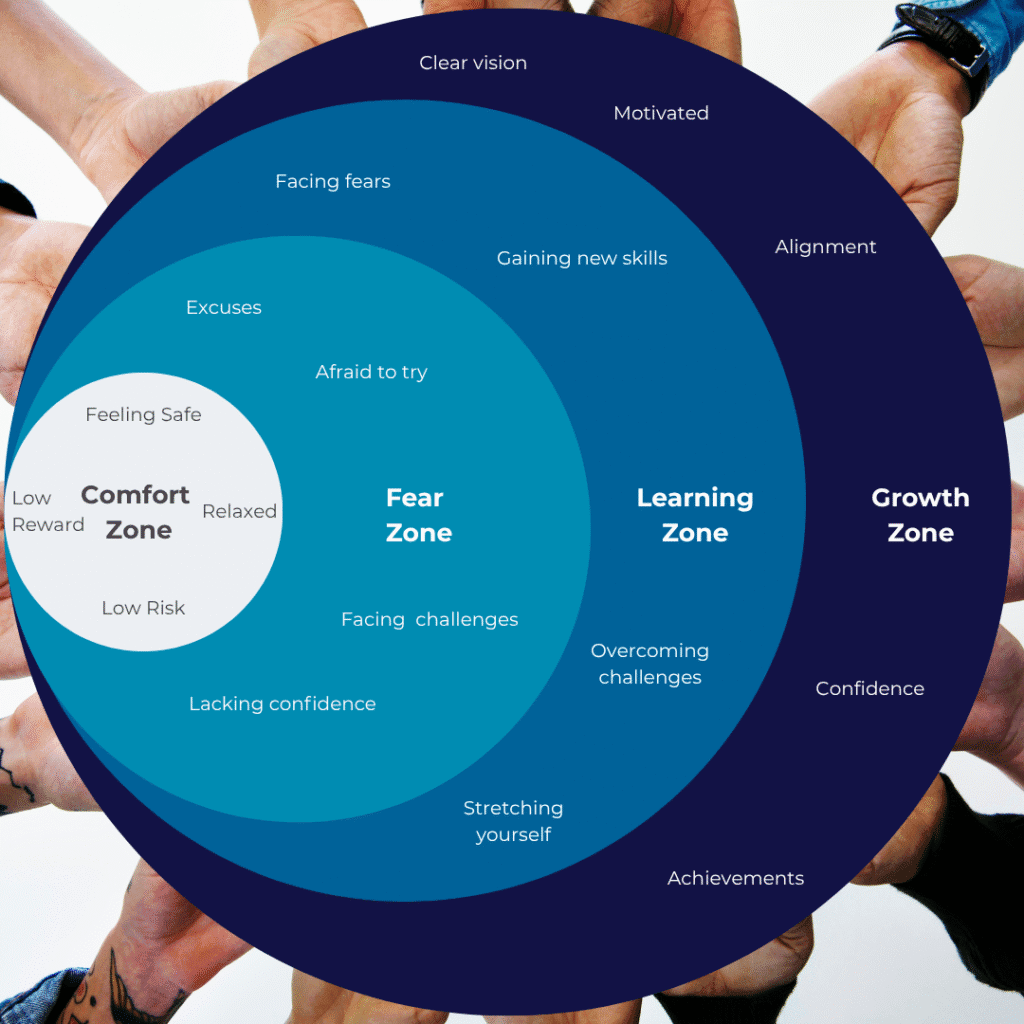
Now, imagine another circle overlapping the first — the Circle of Comfort.
Inside is what feels familiar, safe, manageable.
Beyond it lies the learning zone — a space that’s sometimes uncomfortable, but where growth happens.
If you never step beyond comfort, control turns rigid. But if you live outside it too long, anxiety takes over.
Growth happens in between.
“Comfort is where you recharge. Growth is where you expand. The trick is learning how to move between them without losing yourself.”
Therapy often helps people find that rhythm — the push and pull between safety and stretch. For someone who’s experienced trauma or burnout, comfort isn’t laziness; it’s recovery. But for someone who’s been frozen in fear or perfectionism, too much control can become a cage.
When you start naming those zones — comfort, learning, panic — you can meet yourself with compassion rather than pressure. You start to say, I’m not stuck. I’m recalibrating.
Bringing It Together: Finding Your Edge
The circles of Control and Comfort aren’t opposites. They’re partners.
One protects your boundaries; the other tests your edges.
Control gives you stability. Comfort gives you rest. Together, they form a map — one that helps you recognise when you’re holding too tightly or drifting too far.
Therapy becomes the practice ground for this. A place where you can experiment safely with loosening control, facing discomfort, and discovering that what’s unfamiliar doesn’t have to mean unsafe.
Sometimes that looks like:
- Saying no without overexplaining.
- Naming what you need instead of assuming it won’t be met.
- Sitting in silence for thirty seconds longer than feels comfortable.
The Space Between
When you start noticing both circles — your control and your comfort — life becomes less about perfection and more about presence. You stop seeing every challenge as a threat and start recognising it as an opportunity to test your resilience.
You can’t live entirely inside either circle.
You rest in one, grow in the other, and move between them as life unfolds.
And on the days it feels like everything’s outside your control, or comfort is nowhere to be found — that’s where therapy helps. It doesn’t hand you a map; it helps you draw one.
Because ultimately, the goal isn’t to shrink your world to what feels safe, or expand it until you’re overwhelmed — it’s to find peace in the spaces in between.