
The Imbalance We Don’t Talk About
Connection
We talk a lot about connection — relationships, friendships, family, even digital ties. But we rarely talk about the weight of them.
Not all connections carry the same depth, and yet we often find ourselves giving 100% emotional weight to someone who only represents a fraction of our lives. That imbalance is exhausting, sometimes even corrosive.
We’ll also look at Robin Dunbar’s friendship theory (the different levels of connection) and how we can view it slightly differently.
At a glance
- Not all connections carry the same depth — imbalance drains us.
- Our brains don’t filter social rejection well, making small things feel big.
- Social media rewards shallow ties over deep ones.
- Neurodivergence can amplify imbalance.
- Realignment restores energy and balance.
Think of your relationships as layered. Closest friends and loved ones might sit in layer one — the inner circle. Then come colleagues, casual friends, acquaintances, social media contacts, and finally the vague connections who know you more by name than by person.
Now imagine each layer represents 20% of your emotional bandwidth. In theory, someone in layer four shouldn’t command more than 40% of your emotional energy. Yet how often do we find ourselves giving near-total energy to someone at the outer layers — worrying, overthinking, replaying their words?
It’s like handing over your whole paycheck to the barista because they forgot your coffee order. Out of proportion.
Why We Do It
The answer lies in wiring — biological and psychological. Humans are social creatures; rejection has always been coded as a survival threat. Our nervous systems don’t distinguish well between who matters most. To your body, a raised eyebrow from a stranger can feel like the same social alarm bell as a loved one’s disapproval.
Add in neurodivergence, past trauma, or a heightened sense of empathy, and the dial gets stuck on high. It’s not just that you care — it’s that your system doesn’t filter intensity by context.
Burnout by Mismatch
This is where imbalance begins to erode us. We spend energy wildly disproportionate to the value of the connection. Someone in layer four eats 80% of our thoughts. Someone in layer one — who actually deserves it — only gets what scraps are left.
Burnout isn’t always about work. Sometimes it’s about relationships, conversations, and unspoken expectations that drain you more than deadlines ever could.
That mismatch doesn’t only play out in conversations — it’s magnified online, where hundreds of shallow ties compete for attention.
Social media is an interesting place – all these millions of people, and someone random makes a comment, and you take it like a stab to the heart. Do they really deserve that much influence, or are they so far removed you can safely mark them as irrelevant?
The Social Media Effect
Scroll through Instagram, Facebook, or LinkedIn and you’ll see the imbalance magnified. A passing comment from a stranger can stick like glue, while the consistent support of someone close barely registers. Social media hacks our reward systems, making layer four and five connections feel like layer ones.
But dopamine hits aren’t the same as depth. They keep us chasing likes while neglecting the people who’d show up at our door in crisis.
Anyone who’s spent time in online communities has seen this — a stranger’s throwaway comment can carry more weight than the voices of those who actually matter.
Balancing the Heat Map
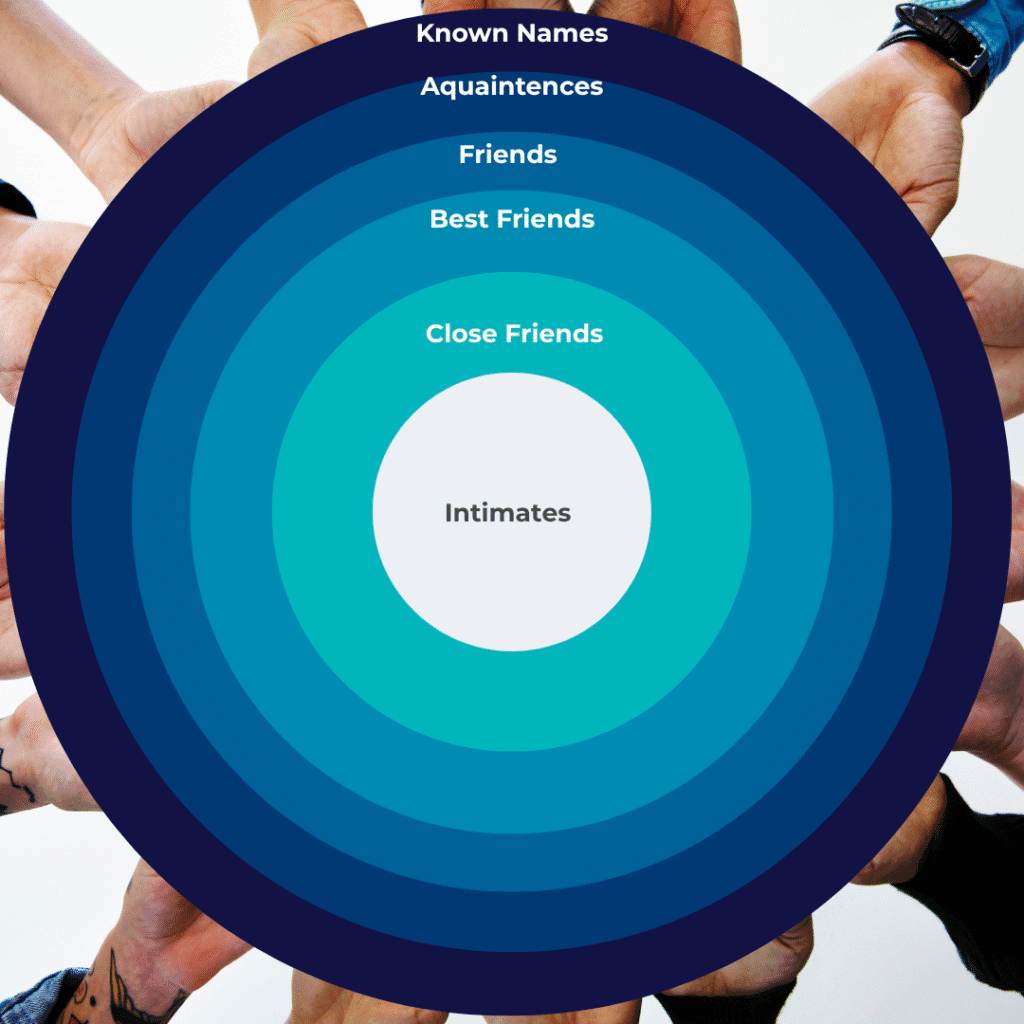
Here’s a reframing exercise that helps. Imagine your connections as a heat map. It’s based upon Robin’s Dunbar’s friendship theory, but instead of showing you what type of friends at a level, we’re looking at the intensity you should care about that person based on where they are in your circle of friends.
Inner circle (layer one) burns the brightest. This is for those who you know intimately .
Layer two and three still carry warmth — reliable, but not blazing. So you close and best friends.
Layer four and five are faint glows, background radiation rather than hearth fires. Friends and acquaintances.
Lastly layer size people who’s names you know.
Now ask yourself:
Am I matching the heat of my response to the layer they belong in?
If someone is a layer six, a known name, would you treat them like someone you were intimate with? No, as you care less for that person. If you did treat them that way though, that mismatch creates an emotional deficit — and it’s usually you paying the bill.
The Role of Neurodiversity
For neurodivergent people, this balancing act can be even harder. Some of us experience all-or-nothing intensity — every connection feels urgent, every bond feels heavy. Others burn through “social spoons” far faster than neurotypical peers, meaning the imbalance costs more in recovery time.
The trick isn’t to stop caring, but to notice where the energy leaks happen. Once you map it, you can redirect without guilt.
Signs You’re Out of Balance
Here’s some signs that you’re expending too much energy in some places;
- You replay conversations with acquaintances but go silent with close friends.
- You feel drained after low-level interactions but too tired to connect with those who matter most.
- You invest more energy in digital validation than in real-life support.
- You notice resentment creeping into relationships that should feel lighter.
Realignment Practices
So here are a few ways you you could try:
- Pause before reacting. Ask: Which layer does this person belong to? Match your emotional output to that.
- Redirect energy inward. When you catch yourself spiralling over someone peripheral, try grounding: name five things you see, four you hear, three you can touch. Anchor yourself back into now.
- Invest where it counts. Set aside time and energy for the inner circle. Even a ten-minute call with someone who really matters resets your balance.
- Audit your map. Who’s glowing bright who shouldn’t be? Who’s been neglected even though they’re central? Adjust where you pour your fire.
- Remember reciprocity. If the flow always goes one way, you’re carrying a mismatch. Connection isn’t about scorekeeping, but it should feel mutual over time.
Why This All Matters
When we rebalance, the change is profound. Burnout eases. Resentment cools. Energy flows back into the people and projects that actually sustain us. And — crucially — we start holding ourselves with the same weight we offer others.
Because sometimes the most neglected layer isn’t outer or inner — it’s the one at the centre. You.
Connection is sacred, but it’s not equal. Some people are worth the full flame. Others are flickers in the distance. You don’t owe everyone your whole fire.
By mapping the imbalance and re-aligning the flow, you protect your energy, your heart, and your time. And you start to experience connection not as exhaustion, but as nourishment.